
Perry Previous Residents by Era
No single roll names every occupant of a Perry address. The best source shifts with the period. For modern work, the Houston County parcel card and the recorded deed come first. Mid-century work adds directories and the public federal census. Early Perry research often leaves the web. It turns instead to deed books, probate volumes, council minutes, and newspapers. The table separates verified local coverage from collections whose exact Perry years still need confirmation.
| Source | Years It Covers | Where Held | What It Shows |
|---|---|---|---|
| Houston deed books and abstracts | Begins 1822; published Books A-G reach 1840; web cutoff unstated | Superior Court Clerk, Archives, FamilySearch | Owners, legal descriptions, book and page |
| Perry directory evidence | Sampled 1966-2016; Polk edition verified for 1997 | Golden Local History Room and cited studies | Listed occupants or businesses at an address |
| Federal census | Public schedules through 1950 | NARA and library genealogy databases | Enumerated households on one census date |
| Perry permits and plans | Online start not stated | Community Development portal and records request | Work, applicants, contractors, dates, inspections |
| Houston County newspapers | Issues from 1870-2008 | Georgia Historic Newspapers | Sales, deaths, legal notices, and address clues |
Start with the newest fact you can trust. That is usually a parcel ID and an acquisition deed. For a postwar family, compare directory appearances against the 1950 census and newspaper notices. Nineteenth-century residents need different anchors. Keep the land lot, district, subdivision, and book and page references, because a modern street number may never appear in those records.
Perry Deed Index Gaps
The Georgia real-estate index searches by county and party. It also covers instrument type, book, page, file number, and date. What it lacks is a stated starting year. The Houston County Clerk publishes no earliest online year. That gap matters for anyone tracing previous residents through the Houston County deed books. A blank result may mean the book stayed offline. It does not mean the transfer never happened.
Call the Real Estate Division at 478-218-4720 before assuming a cutoff. Each public courthouse terminal offers a second access route. Bring the parcel number, legal description, and last known book and page to the counter. Earlier years live in the bound grantor and grantee indexes. Ordinary copies run $1. Certified copies cost $2.50 for the first page and $0.50 for each added page.
See the Houston Superior Court Clerk access page before a visit. The office page displays the contacts and terminal options that route deed and court-record requests.
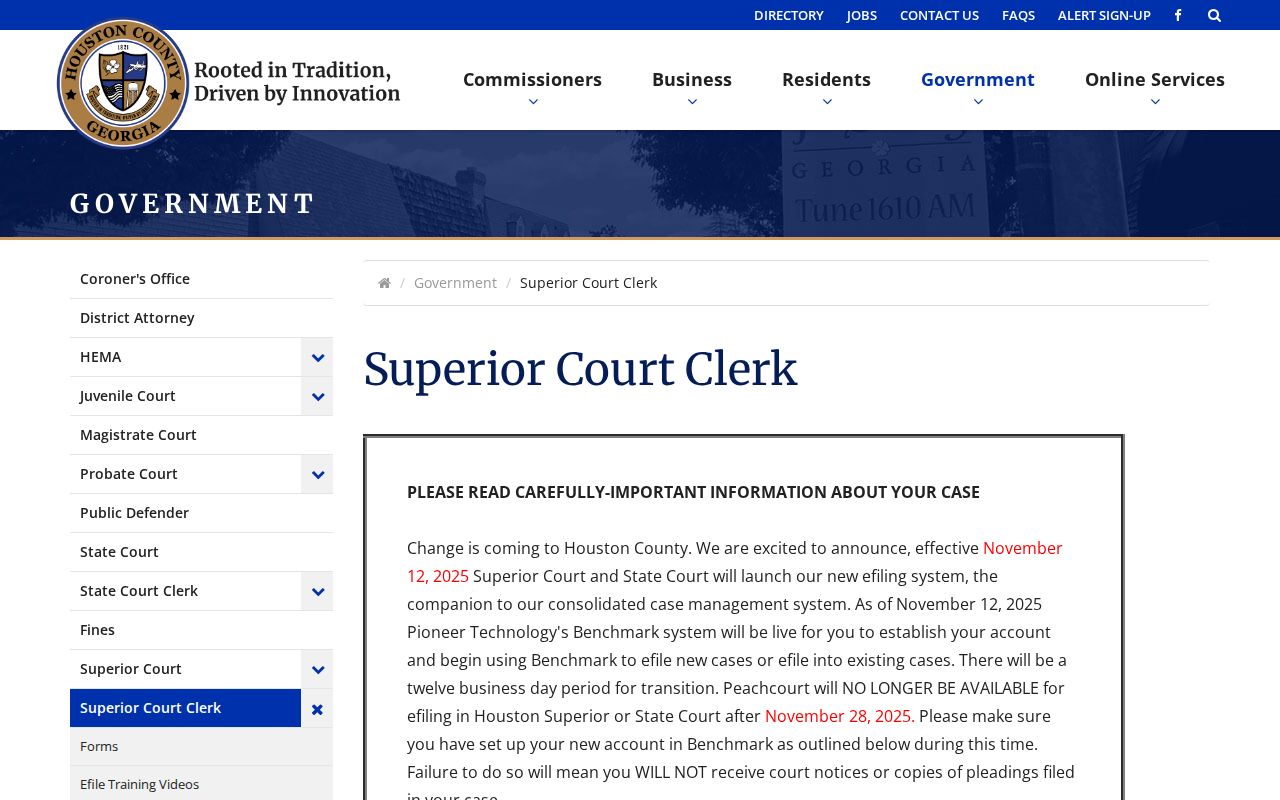
The clerk remains the record authority when an online index or image is missing.
Trace Perry Owners Backward
A chain of title is the linked sequence of recorded transfers for the same land. Begin at the Houston County property search. Copy the current owner, parcel number, situs address, legal description, subdivision or land-lot data, and any sale reference. Situs means the physical spot, not a mailing address.
- Open the current parcel card and record its stable land keys, not just the street address.
- Find the present owner's acquisition deed. Record the grantor, grantee, execution and recording dates, book/page, and referenced plat.
- Search that grantor as a grantee in an earlier date range. Match the legal description before accepting the hit.
- Repeat the seller-as-buyer search until the online coverage ends or the legal description changes.
- Carry the last book/page to the clerk's public terminal, bound index, or microfilm. Never invent an online cutoff.
- Grantor and grantee
- The grantor transfers an interest; the grantee receives it.
- Chain of title
- The linked run of recorded transfers for the same parcel.
- Legal description
- The land identity based on lots, blocks, land lots, plats, or measured boundaries. It survives many address changes.
A deed proves a recorded interest, not residency. Security deeds, trustees, and nominal consideration also need care. Match each transfer to the parcel, then seek a separate source that shows who actually lived in the house.
Perry Directories Meet the Census
One environmental study sampled Perry city-directory editions from 1966 through 2016 for Macon and Meeting Street addresses. A newspaper notice separately proves an R. L. Polk Perry directory in 1997. Neither fact establishes a continuous annual run. Nor does it confirm reverse sections. The Judith A. Golden Local History Room, reachable at 478-987-3050, keeps shelf lists and abbreviation pages for its holdings. Pairing sources controls the gaps:
- Find a known address or surname in one directory year and copy the entry exactly.
- Move one available edition at a time, recording the first and last appearance without treating either as a move date.
- Bridge the run with the 1950 census, using a contemporary enumeration-district map where boundaries shifted.
- Check deeds, permits, probate, and newspapers around each apparent change.
A criss-cross directory, when a Perry volume contains one, arranges listings by street and house number. An enumeration district is a census taker's patch. The Perry Directory Book covers the collections themselves. The backward address trail stays fixed on who lived at a Perry address before.
Perry Permits Date the Building
Perry Community Development keeps permits, inspections, plats, zoning matters, and planning files keyed to an address. Search Citizens Self Service by address, parcel, or record number. Older files may not surface online. For those, email or deliver a defined request to Community Development at 741 Main Street. The City Clerk also takes Open Records Act requests.
A permit fixes names and dates. It can place an owner, applicant, contractor, work description, and status on a date, but it does not prove the applicant lived there. Permits date additions, demolition, repairs, and changes in use. Then compare with a deed or directory change.
Note: Houston County plats became electronic-only filings in 2017, while older plats may remain in books or earlier image systems.
Perry Preserved Its First Deed
Perry house history benefits from unusually early land continuity. Houston County deed abstracts begin with Book A in 1822, close to the county's creation. A 1937 Georgia DAR report adds a preservation twist. Perry preservationists, it says, sent certified copies of the first Superior Court minutes, the first deed recorded in 1822, and records from four family burial grounds to the DAR Librarian General.
That story points to a sound method for previous residents. Copy index citations before chasing names. Houston abstracts for Books A through G reach 1840. Georgia Archives reports that most pre-1900 county deeds, estates, marriages, tax digests, and court minutes were microfilmed. Search the Archives catalog by county and series. Then use a volume's own index before browsing page by page.
Perry Resident Trails After Death
An obituary or an estate file often explains why a name drops out of the Perry residents directory. Georgia Historic Newspapers is the place to start. Search around the year of the last known listing. Try initials, surname spellings, “Mrs.” forms, and a street fragment too. The Houston County newspaper collection runs from 1870 through 2008, though OCR can miss worn type. When an exact search fails, browse the issues nearby.
Probate records can carry the trail further. Petitions, notices, inventories, and returns may name the decedent, the fiduciary, heirs, relationships, addresses, and land. Houston Probate Court holds the originals. FamilySearch offers a Georgia probate collection through 1990 that includes participating Houston County volumes. Newer matters may need the court's own index or a visit to the counter.
The Houston County Probate Court page names the office and its record functions. Its view appears below.
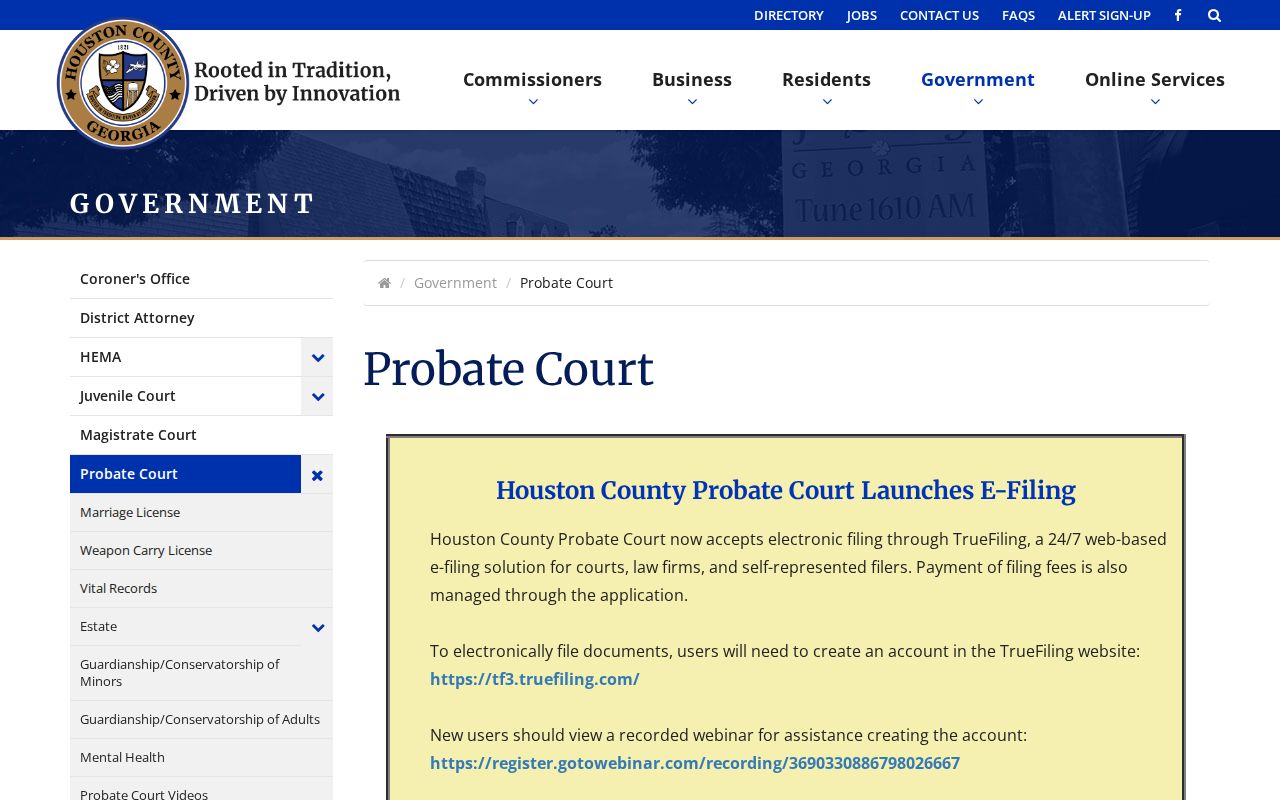
The court file, rather than a derived name index, controls the estate details.
Perry Previous Residents and Marriage
A name change can break a backward trail. A directory may list one surname, while a deed or obituary uses another. Marriage records build the bridge. The free FamilySearch collection covers Houston County marriage records from 1832 through 2015 and cites Probate Court originals, so search surname variants and inspect the image whenever access allows. Open the Houston County marriage collection first.
A Houston County marriage index helps establish who married whom, and it can strengthen identity or family research, yet a marriage record alone does not place anyone at a particular address.
Perry Addresses Need Stable Keys
Perry has no confirmed citywide street-renumbering date. Addresses still drift over decades for quieter reasons. Sanborn fire-insurance maps can show a building's footprint, material, stories, and use, but the catalogs list no Perry-specific sheet years, so locate the exact town sheet before assuming any coverage. Bridge address change with a parcel number instead. Add the legal description, a plat, and a contemporary map to pin the site down. Historic Preservation Commission surveys cover the Washington-Evergreen, Swift Street, Downtown, and Oldfield areas, and current material includes a five-volume inventory of roughly 250 resources plus updated Swift Street records. A surveyed property gains a photo, architectural notes, district context, and names. None of that proves every occupant.
Confirm Perry Past Households
Owners are only part of an address story. A directory may list selected adults or a business. A census captures the enumerated household on a single date. A permit names a participant in work. An obituary or probate file can connect relatives after a death, but no record should be stretched past what it actually says. For Perry previous residents, build a dated worksheet. Use one row per source. Keep owner, occupant, applicant, heir, and mailing addressee as separate roles, and mark the gaps. The latest public census is 1950, and the next schedule is not public yet, so a missing directory entry may reflect a canvass refusal or an unavailable edition rather than absence from Perry.
Lawful use. Research previous residents for house history, genealogy, heirs, or personal curiosity. Never use an address trail to stalk, threaten, or harass a living person.